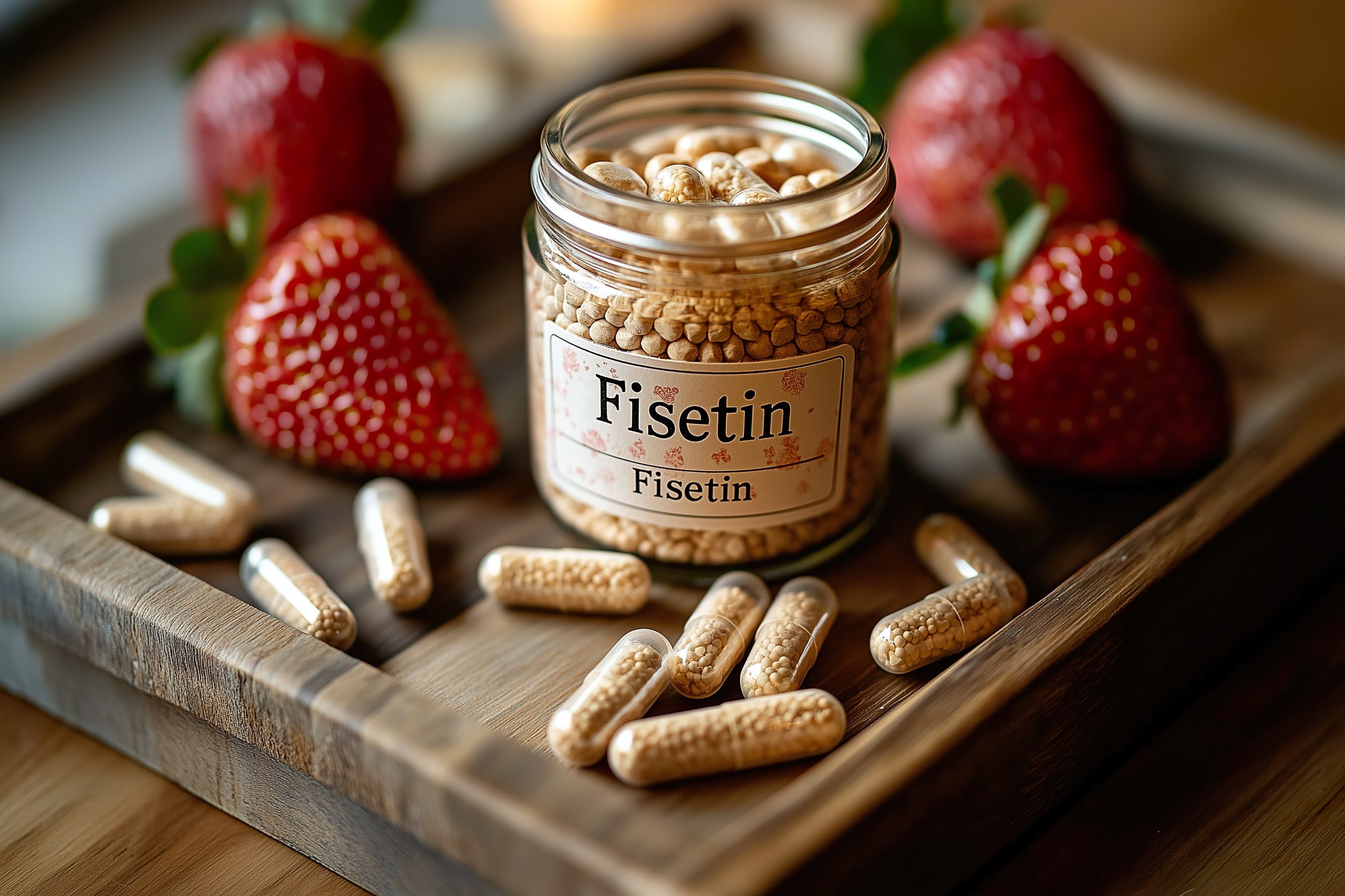
This all started with a postcard I received from Northwestern, “Do You Have Difficulty Walking?”, beckoning me to enter the FIRST research study. This is not “first,” like “first, second,” but an acronym (not mentioned on the card) for quite a mouthful: Fisetin to Reduce Senescence and Mobility Impairment in Peripheral Artery Disease.
“Fisetin?”, I thought. Hard to keep track of all the nutritional supplements out there. I mean, the FDA estimates well over 100,000 different products with thousands of new ones added yearly. I remembered once reading about Fisetin in the Life Extension Foundation Magazine. It’s a flavonoid, cousin to resveratrol and quercetin, a potent antioxidant mopping up “free radicals,” which damage cells and shorten your telomeres and your life span.
In the past few years, Fisetin came to the forefront, quite popular in Europe, among those specializing in Anti-Aging Medicine. Fisetin seems to work like this:
- Fisetin reduces damage from a phenomenon called “cellular senescence,” in which many of your cells are ‘dead’ but remain in your body like zombies that release harmful chemicals and cause inflammation to adjacent healthy cells. Fisetin acts as a cleanup crew.
- As mentioned earlier, every day our cells are attacked by unstable molecules from the toxic environment called ‘free radicals.’ Antioxidants protect us from free radicals and Fisetin is one of the most potent of the antioxidants.
- Fisetin has also been shown in animal models to quell the smoldering fires of chronic inflammation by blocking certain pathways that produce inflammatory molecules like cytokines.
- Animal models have also shown that Fisetin can cross the blood brain barrier, reduce brain inflammation, and improve cognitive function.
- Lastly, and this is where the Northwestern study fits in. Our heart and blood vessels are also major targets of aging. Over time, inflammation, oxidative stress, and damage to the lining of blood vessels can lead to high blood pressure, atherosclerosis (clogged arteries), and heart disease. In some studies, Fisetin helped to improve blood flow, reduce arterial stiffness, and lower inflammation in blood vessels, reversing peripheral arterial disease.
Fisetin is used in Europe as an anti-aging supplement. My anti-aging devotees here at WholeHealth Chicago are mainly using Ultra Resveratrol, Liposomal NMN, NAD+ and Taurine and perhaps monthly infusions of NAD+. Since Fisetin is not expensive, I wouldn’t bother with the Northwestern study as half the participants will most likely receive a placebo, a ‘sugar pill,’ and end up with a year’s worth of nothing.
Dose: 40-50 mg a day, best taken with food.
Be well,
David Edelberg, MD
That postcard asking about difficulty walking quietly leading into a fisetin study on senescence and peripheral artery disease was a surprising pivot. It makes me think anti-aging research is already sneaking into ordinary clinical settings, just framed around mobility rather than longevity. Maybe that’s how it gains acceptance. nightly routine
MyNightfall bedtime
It’s fascinating basketball stars
Hailey Nelson
It’s fascinating to see how new studies are exploring healthy aging.
drift boss
I really appreciate how you’ve delved into the Northwestern research study and the role of Fisetin. It’s fascinating to learn about these connections in anti-aging medicine. I once read about antioxidants too, and it made me more conscious of my supplement choices. Similar to how understanding different elements in anti-aging is crucial, optimizing video content is important. That’s where video extender comes in, helping you make the most of your video footage.
Video Extend
Thank you geometry dash! I was recently diagnosed with early-stage peripheral artery disease, and my doctor prescribed statins. However, I’m quite reluctant to take them because of the potential side effects.
carep93055
Apparently you have to be of substantial means to take part in “anti-aging” protocol.
Dennis Newport
Thank you! I have the beginning of peripheral artery disease for which they prescribed statins. I am very hesitant to take statins due to side effects.
Nannette Favero Marienthal
Hi Dr. Edelberg. Thank you for the article! I know you also mention reservatrol…is that in the form of japanese knotwood? I know I have read that if you are on HRT you may not wish to use japanese knotwood, so I have not yet added that into my regimen
Barbara Mockus