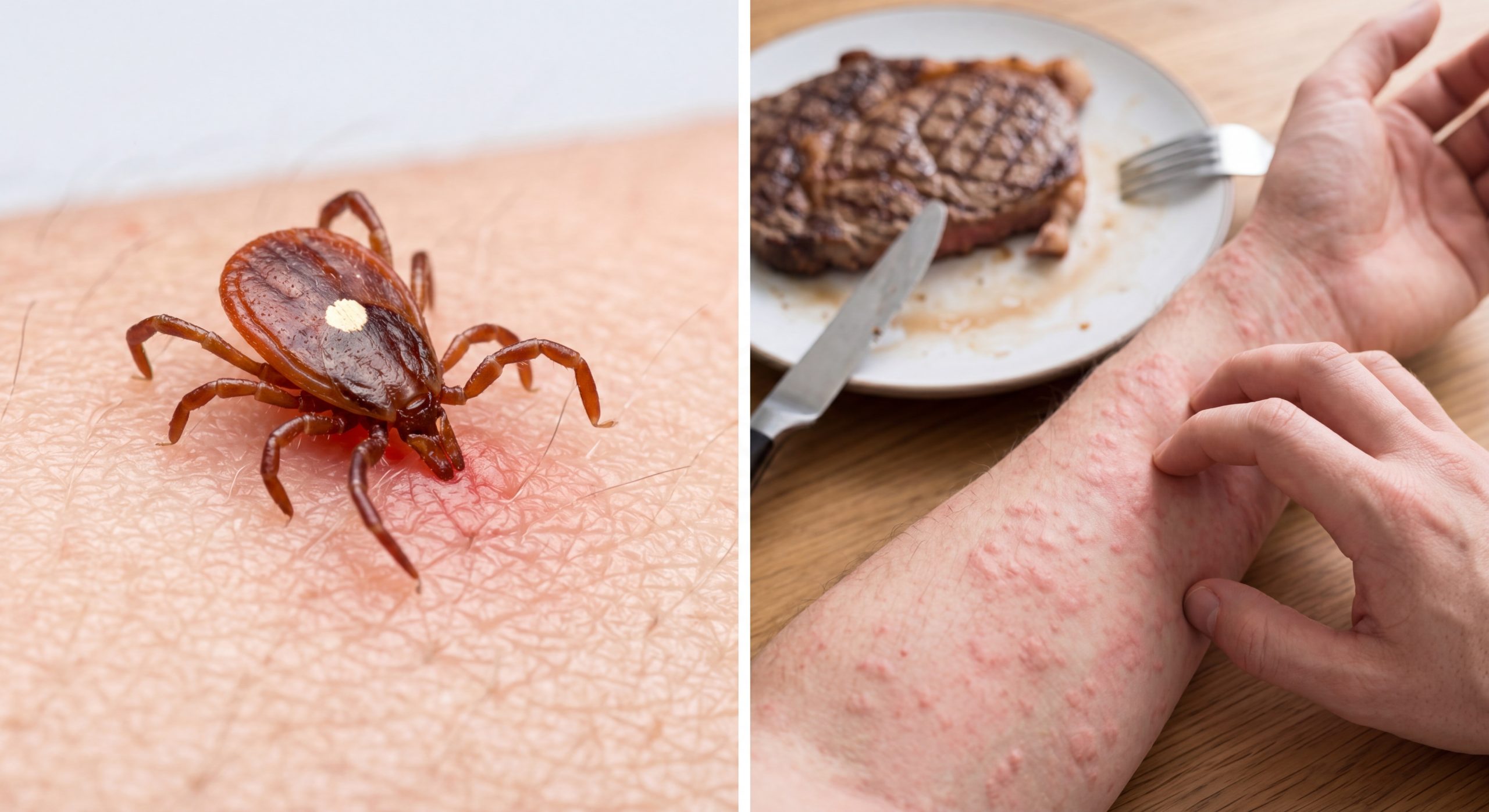
Unexplained sudden deaths give me the willies but also pique my medical curiosity. Maybe you caught the story in last week’s New York Times which took doctors a year to solve. A healthy 47 y/o airline pilot was grilling burgers with his family in his backyard, became suddenly ill after eating his, then quickly unconscious and later that night he was dead.
He had developed an allergy to red meat called the Alpha Gal Syndrome triggered by a long-forgotten bite from a Lone Star tick, originally from (you guessed it) the Southwest, but migrated happily first to New England and then the Upper Midwest. Illinois, Wisconsin, Michigan, Minnesota. I know this is only my political paranoia but the tick invasion across the U.S. does seem confined to Blue States, strangely sparing the Red. (Check any map on the subject.)
Several years earlier he had gone jogging through tall grass along the Jersey Shore and came back with dozens of itchy bites on his calves and ankles. Any Midwesterner would recognize these as chigger bites, as he mistakenly did and treated them with an anti-itch cream. This is a photo of chigger bites. I get these constantly.

Little did he know he had been chased (yes, “chased,” ticks love our smell and can follow us for yards!) and then bitten by the smallest form of the Lone Star tick, about the size of a poppy seed.
Here’s a full quote from the New York Times, and if this isn’t enough for you to take tick precautions, possibly just get a condo in Streeterville and stay inside, waiting for winter.
“The lone star tick, especially, seems as if it crawled out of a horror flick. With its aggressive approach to hunting and unusually long, barbed mouthparts designed to anchor into our flesh, it resembles a miniature version of the alien in the “Predator” movies. Unlike most other ticks, which take a let’s-see-what-comes-along approach, the lone star will pursue you for several yards. It’s fast, able to crawl up a leg in seconds and is one of the relatively few tick species whose larvae bite humans: Step on a cluster of lone star babies and you will soon find hundreds of poppy-seed-size vampires coating your ankle. They can even push through your socks.” (NYT July 11, 2026)
How do you know if you have Alpha Gal Syndrome?
Honestly, having worked with hundreds of patients with tick-borne illnesses, most people don’t remember a tick bite much less the famous bulls-eye rash. When focusing specifically on Alpha Gal (which is an allergy to a specific sugar in red meat, alpha galactose, we ask about the usual litany of allergy symptoms after eating red meat (hives, runny nose, wheezing, swollen lips, abdominal cramps). The unfortunate pilot died of a full-blown anaphylactic reaction.
There’s a good blood test for Alpha Gal (covered by insurance) measuring IgE antibodies against Alpha Gal. Obviously your immune system has better things to do than creating antibodies against Big Macs, so a “normal” result should be ‘zero’ or at least very low.
Treating Alpha Gal Syndrome
There is no “cure” for Alpha Gal except avoidance of red meat products. On the plus side, if you’re careful about doing this, your IgE antibody load will decline and if your case is mild, you may be able to return to a limited amount of red meat.
Since the symptoms are typical of allergies, you can treat flare-ups with antihistamines but definitely have an Epi-Pen available. The symptoms are very similar to a heightened condition called Mast Cell Activation Syndrome and adding a couple of meds/supplements may help you considerably.
Preventing Alpha Gal Syndrome
Everything you remember about tick bite prevention still holds: wear long pants (best sprayed at the cuffs with permethrin), tuck cuffs into socks, tick checks at end of hikes. Best skin spray is Deep Woods OFF! (DEET)
Coincidentally, as I write this, I am out at my cabin, preparing for a hike and writing this, dipping myself in DEET and still I’ve managed to terrify myself.
Be well,
David Edelberg, MD
The tick-bite-to-red-meat-allergy connection still blows my mind — I never realized a single Lone Star tick bite could turn an ordinary burger into a life-threatening event. The part about ticks being able to follow your scent for yards honestly made me rethink my own trail habits. This one is going straight to my family group chat; thanks for the reminder to treat my pants before hikes.
Lagos Run
I wonder why you choose “hamburger” as a part of death. That’s strange. Block Blast is a fun puzzle game that tests your smart strategies via your block placement.
susan willy
connections game is a clever word puzzle that puts your ability to spot patterns to the test. Instead of solving one clue at a time, you get a collection of words and need to discover the connections hiding between them.
Peck Walter
This Alpha Gal syndrome story is wild – who would’ve thought a tick bite could make you allergic to red meat years later? I’d need to size it up carefully if I were that pilot, maybe start with tiny burger pieces to test the waters before diving into a full patty. Nature has some seriously unexpected ways of getting back at us!
size it up
getting over it is a challenging climbing game where players control a man in a pot and use a hammer to overcome difficult obstacles.
Whinvers82
Playing FNF for the first time surprised me because every rhythm battle demanded sharp timing, and each successful combo made me eager to keep practicing despite repeated mistakes.
shella jane
Amazing
Sante-Clarte