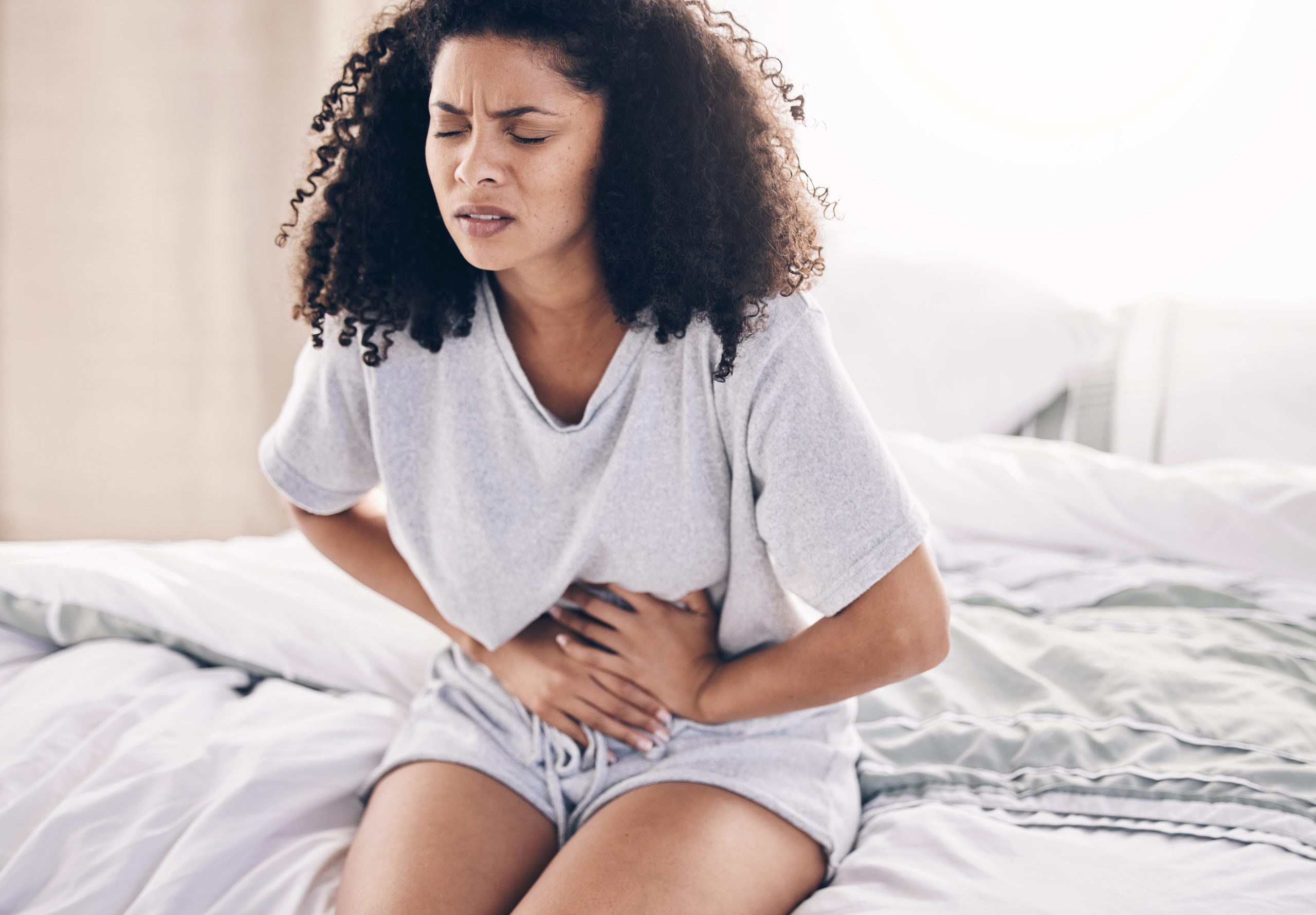
A smart woman in her mid-forties, Melanie had written “Bad PMS” neatly on our patient intake form, and then gone on to trace the word “Bad” several times with her pen and underlined it.
Until about ten years ago, the odds were stacked against women like Melanie, trying to get help from their doctors for that Pandora’s box of hardships known as premenstrual syndrome. Doctors, both male and female, had been taught in med school that symptoms of any sort only required intellectual pursuit if they related to disease, which in turn could only be diagnosed using tests. With PMS, no “positive” tests. No “disease.” Suffer in silence.
If you are devastated by the symptoms of premenstrual syndrome (and roughly two hundred symptoms <!!> have been identified), there’s really no “disease” present. Nothing much shows up on tests. But I promise this: PMS will never appear as a line item on your death certificate. Women surely have heard a doctor tell them, “That’s just part of being a woman.” In fact, the first medical description of PMS didn’t appear in a medical journal, but in an advice column of the Ladies’ Home Journal.
Doctors are generally more understanding today, but this hasn’t helped Melanie. She couldn’t remember when she hadn’t had PMS, with the full range of symptoms affecting both body and mood. Now, in her mid-40s, everything seemed to be getting worse. Her symptoms included headache, breast tenderness, bloating, constipation, fluid retention, and a blush of acne.
In addition, she told me she’d start her two-week PMS nightmare weepy if someone looked at her cross-eyed and ended it like the famous Francisco Goya painting: Saturn Devouring his Son. She also said her only good week was the one immediately following her period, and even that seemed to be getting shorter.
I explained to Melanie that there are two aspects of PMS–estrogen dominance and the brain chemical serotonin insufficiency and she suffered both.
In the second half of your cycle, starting about Day 14 (assuming fertilization doesn’t occur), levels of both estrogen and progesterone, start to fall. The amount of estrogen should be lower than progesterone, but in a PMS situation the opposite occurs. Too much estrogen. This is not disease, it’s just you, and the excess estrogen stimulates estrogen-sensitive areas like your breasts while also causing fluid retention and headaches.
Latched onto your estrogen, like the second car of a two-car roller coaster, is your stress-buffering serotonin. If your estrogen drops, so does your serotonin, and down goes your stress buffer. You now go through life like a walking open wound and everything around you is salty. You cry at a Hallmark movie and later the same day you may make rage into an art form. While weeping (or raging) you tell yourself, “This isn’t me!” You’re right. You’re in the thrall of your hormones and brain chemicals.
And where do the 195 other symptoms come from? Any symptom you experience that has a cyclic component to it, worse during PMS days, is a PMS variation.
For Melanie, in the foothills of perimenopause, declining estrogen levels were resetting her serotonin even lower, so with each passing year, her mood-related PMS issues kept getting worse.
Melanie’s previous doctor had run thyroid and blood tests and found them normal, so we could start PMS treatment immediately. First her diet. She needed to reduce her intake of sugars (especially high fructose corn syrup), refined white-flour products, and meats high in saturated fats, increasing lean protein like fish and chicken breast and emphasizing complex carbohydrates, including all fruits and vegetables as well as half-cup servings of oatmeal in the morning and kidney beans or brown rice at other meals. Get rid of ultra-processed foods completely.
Regular exercise and being in the sunlight (walking outside at lunchtime) would bump up her feel-good serotonin.
She could make real headway using two herbs: Vitex, one daily (also called chasteberry) to balance her hormones and St. John’s wort, two daily to raise her serotonin. Since vitex can take 3 to 4 cycles to work, she could speed the process using over-the-counter progesterone cream, one pump daily, three weeks of a month.
I asked her not to expect much of anything for the first month, but to hang in there. By the second month her mood improved, and her breasts were less tender, and by the third month, she reported a much happier Melanie.
If we’re not making the progress that Melanie would like to see, I’d suggest switching to two FDA approved prescription meds:
- Lexapro 10 mg (citalopram) every morning, from midcycle to flow (raises serotonin),
- Progesterone 100 mg every evening same schedule.
Be well,
David Edelberg, MD
This case study resonates — the way you mapped Melanie’s symptoms to both estrogen dominance and declining serotonin makes the whole two-week pattern click. I appreciate the practical, stepped approach: starting with sunlight, movement, vitex and St. John’s wort before escalating to Lexapro and progesterone gives patients real agency. The note about not expecting much in the first month is so important; patience is genuinely part of the treatment. Quick aside — I recently tried a free browser game called Lagos Run where you dodge through chaotic Lagos traffic (https://lagosrun.org/), and the adrenaline spike it gives honestly reminded me how sensitive mood and stress chemistry can be to small triggers. Great reminder that hormones, like traffic, need the right rhythm. Thank you for sharing Melanie’s story!
Lagos Run
Thanks a lot for sharing this post! Snake free
Frederick Hill
I think this is the best article for you right now. Snake free
Frederick Hill
I appreciate the compassionate way this case makes a difficult cyclical experience feel specific rather than dismissible. The detail that Melanie had only one reliably good week after her period, together with the mix of headaches, tenderness, bloating and mood changes worsening in her mid-forties, shows why tracking patterns and bringing them to a clinician can be so valuable. If readers keep visual symptom charts or image-based journal pages, jpg リサイズ may also help keep those files consistent.
Sophia Reed
Thanks for sharing this case study. It is encouraging to see a functional approach to PMS that looks beyond symptom management. Tracking daily patterns makes a real difference, and tools like wave rider can help people stay consistent with lifestyle changes. Appreciate the detailed write up.
Wave Rider
The detail that her only good week followed her period makes the cycle pattern vivid. Tracking that window could help show whether treatment is working.
Pips Hint
That article on the “Melanie’s PMS Hell” case study was great! It really helped relieve some pressure—now it’s time to tackle granny 2 to blow off some more steam.
Granny2
That essay on the “Melanie’s PMS Hell” case study was amazing!
Granny 2
Quordle still not challenging enough for you? Try octordle– the ultimate word guessing game! 8 keywords, 13 chances, and a brain working at full capacity. This isn’t a game of chance, but a battle of sharp logical thinking. Conquer and prove your skills!
elonlilx54
This article offers an interesting explanation of PMS and highlights how lifestyle changes can help improve women’s health. level devil – not a troll game
Alexander
Wow, this case study on Melanie’s experience with PMS is incredibly insightful! It really highlights the importance of holistic health approaches. Thank you for sharing these practical solutions that can inspire others to seek balance. By the way, I stumbled upon https://cookieclickers2.io/ while looking for stress-relief ideas; it’s a fun distraction too!
cookie clicker
Thank you for sharing Melanie’s experience! It’s eye-opening to see how holistic approaches can effectively tackle PMS. So relatable! I love discovering these insights that could help so many women navigate their health better.
cookie clicker
Yeah that’s the same for pet’s health
Le mag animalier
PMS symptoms are often overlooked, but the right approach can greatly improve quality of life. level devil – not a troll game
DDeveil Lason
Such an insightful and empowering case study. It’s great to see conversations around PMS and women’s health being brought more into the spotlight. doodle jump
Johnny Booker