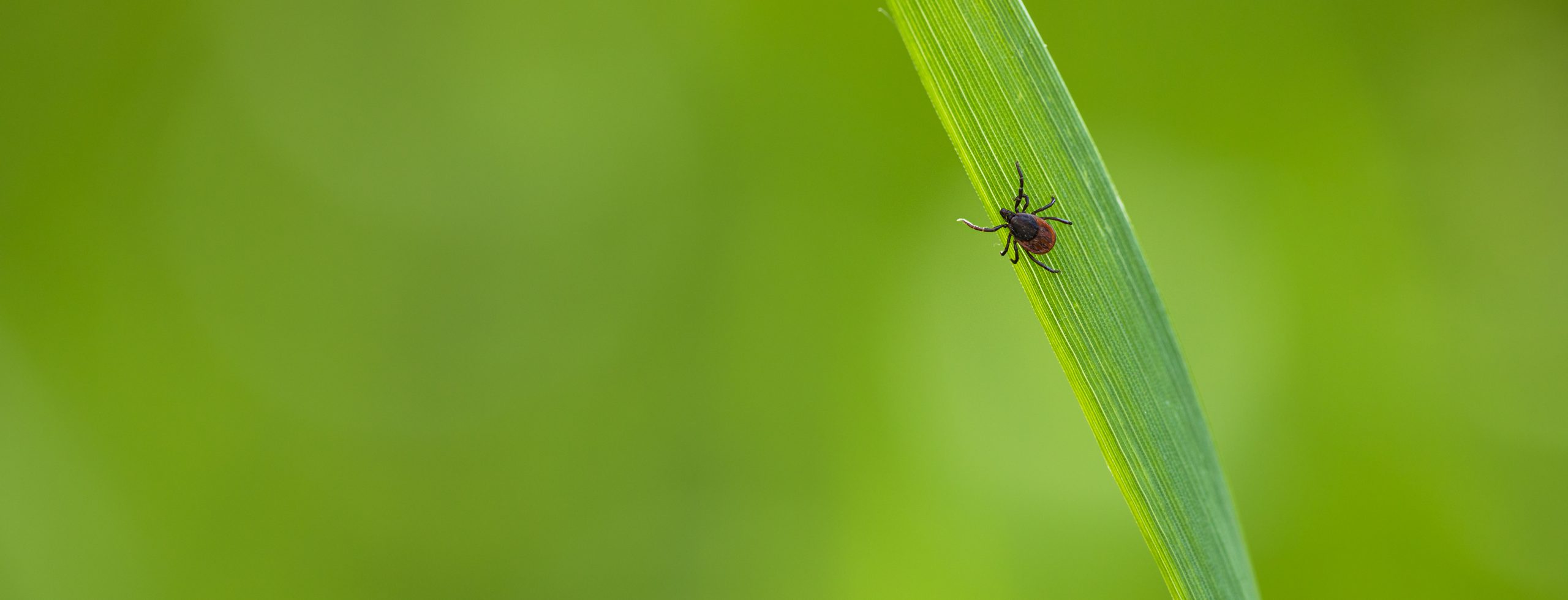
Well, times have changed! Twenty years ago, when I first began writing about Lyme Disease, the Centers for Disease Control had dismissed it with a “no big deal” attitude, estimating 30,000 cases annually, mainly in New England. By 2025, we’re up to 475,000 cases a year, and had some knowledge about the so-called “co-infections,” Bartonella, Babesia, Erhlichia, Anaplasma.
Last week, the New York Times wrote a lead article (with great photos!) about the alpha-gal syndrom, the potentially fatal meat allergy caused by a bite from the Lone Star tick. To my own delight, I’d scooped the NYT on these six weeks earlier in my Health Tip, “Death by Hamburger,” but admit their title was quite good: “The Summer the Ticks Took Over.”
It’s worth reading the NYT article, plus finishing this one because now, the last week of August, early September, is supposed to be a major upsurge nationwide of infected ticks carrying “everything” with advice on how to protect yourselves.
Remember, ticks literally “smell” you coming. The Lone Star can chase you fifty feet. Once attached, the deer tick can lay 1,000 eggs, the Lone Star 5,000. During their attachment, they empty their intestines which contain other organisms. Ticks are a cesspool with legs.
As for the CDC numbers, they’re uncertain if this is an overestimate or an underestimate. Thousands of cases are treated as Lyme but are not reported anywhere. Likewise, thousands of cases of Lyme disease are simply missed by both patient and physician only to surface years later in one of the two forms of chronic Lyme disease.
We see a lot of patients with chronic Lyme at WholeHealth Chicago, largely because Lyme carries a real prejudice from the past, when doctors told patients there was no such illness and patients believed their doctors. As a result, many people have been with chronic undiagnosed symptoms for decades.
Let’s clear the air on Lyme, including alpha gal.
There are three faces of Lyme disease:
- Acute Lyme
- Disseminated/late-stage/untreated Lyme
- Post-treatment Lyme
FIRST FACE OF LYME
Acute Lyme Disease
No one argues about the existence of acute Lyme disease. You’re in the woods in a Lyme-rich area or puttering in your yard. You get bitten by a tick, you see a red rash or you don’t, and have a flu-like illness. Doctors in the Northeast and the upper Midwest see so much of this that they simply start patients on antibiotics without waiting for any test results (which can take weeks to turn positive). Now Lyme is regularly reported in suburbs especially among gardeners.
SECOND FACE OF LYME
Disseminated/late-stage/untreated Lyme
Sometime in the past you (or your child) got bitten by a tick, didn’t notice it, never saw a rash, and attributed the resulting illness (headache, fever, muscle aches) to a summer flu. You got better and totally forgot about the incident.
Your symptoms went away because your immune system stepped in and did its job. Although the B. burgdorferi (or Bartonella or Babesia) has spread through your body, it’s in a dormant (sleeping) state. It could remain suppressed like this for years–decades, even–and never give you a lick of trouble. You’d never be tested for Lyme disease because you’re healthy, but if you were tested, you’d show positive antibodies for Lyme. Very likely quite a few healthy people living in Michigan or Wisconsin would test positive for Lyme, but since they’re fine, we don’t test or treat.
(From random patients: “I never knew I might have Lyme” or “I don’t remember any tick bite” or “I never had one of those bulls-eye rashes.” In other words, no definitive Lyme history except living or vacationing in a Lyme-rich area or going to camp in one as a kid. Is that enough history for the possibility of disseminated/late-stage/untreated Lyme? Yep!)
Other illnesses get suppressed like this. 90% of us have antibodies for Epstein-Barr, most never remembering a case of mononucleosis. Same with shingles (herpes virus), the fungus Candida, and TB. This is our immune system doing its job efficiently.
However, for some people with suppressed Lyme, let’s fast forward 20 or 30 years. Something triggers the B. burgdorferi to awaken and you start developing a plethora of seemingly unrelated symptoms (fatigue, episodes of fever, joint pains that move around your body). COVID is one of these triggers. “Long COVID” awakened dormant Lyme because many cases suppress the immune system and allow the Lyme to ‘perk up.’
You go to your doctor, who orders some basic tests and finds nothing. You look for other opinions. Someone finally does a screening test for Lyme, but the result is iffy and the doctor admits she doesn’t know what to do with it.
You finally get an appointment with a rheumatologist, who refers you to an infectious disease specialist or Mayo Clinic. Both of them tell you (really!) they’re not seeing Lyme patients because (listen up) ,“There’s no such thing as chronic Lyme.
Here’s a list of untreated chronic Lyme symptoms. Obviously, not all patients get all these symptoms:
- Severe headaches and neck stiffness.
- Red rashes that come and go anywhere on the body.
- Arthritis and joint pain, especially in the knees and other large joints.
- Loss of muscle tone or a droop on one side of the face.
- Intermittent pain in muscles, tendons, and bones.
- Heart palpitations or irregular heartbeat.
- Episodes of dizziness or shortness of breath.
- Inflammation of the brain and spinal cord.
- Nerve pain.
- Shooting pains, numbness, tingling in the hands and feet.
- Problems with short-term memory.
What you have that mainstream physicians won’t recognize is disseminated/late-stage/untreated Lyme disease. You were infected but never knew it, were never diagnosed, and therefore never treated and now the once-dormant B. burgdorferi is waking up throughout your body and causing trouble.
This is why we at WholeHealth Chicago get phone consultations from all over beginning with, “I know I’ve got Lyme, but my doctor says he doesn’t know anything about it and won’t treat it.”
If you ever came across the phrase “Lyme wars,” this is it. The war, which got quite nasty, has been between infectious disease specialists in major medical centers and primary-care physicians on the front lines dealing with chronically ill patients.
The basis of the Lyme wars was the lack of a 100% conclusive test that both sides could agree on. Even now, although tests have improved, they’re far from 100%. Without a perfect test, places like Mayo were unwilling to prescribe long-term antibiotics.
On the other hand, frontline Lyme-literate physicians believe in treating the patient, not the lab test, and thus prescribe antibiotics.
THIRD FACE OF LYME
Post-treatment Lyme
If all this isn’t grief enough, post-treatment Lyme disease is a third face of Lyme, one that even doctors familiar with Lyme disease argue about among themselves. These are the people who were correctly diagnosed with Lyme disease months or years earlier and by all recognized standards had adequate treatment. After treatment, they seemed much better. Not perfect, but better.
But then, even the “better” didn’t last. Over time, sometimes years later, they start having Lyme symptoms again.
What’s going on here? One of two possibilities: first, some of the organisms from the initial infection escaped the antibiotic and went into a dormant state. These are called “persisters” and necessitate another course of antibiotics.
Or, and this is a possibility as well, the dormant organisms are too dormant to trigger a Lyme infection, but instead are triggering an autoimmune-like disease. The patient’s immune system, working to suppress the dormant Lyme, is turning against the patient herself and now we’re dealing with an autoimmune disease and treat it as such.
DOCTORS IN CONFUSION!
What exactly do we mean when we say,“chronic Lyme disease?” It’s either untreated/disseminated/late-stage Lyme or post-treatment Lyme, two separate manifestations of infection with B.bergdorferi. The untreated type definitely requires something (herbs, antibiotics) to kill the organism. Post-treatment Lyme often requires similar treatment, and if it fails, it may be because an autoimmune component predominates.
What doesn’t help, of course, is when the poor patient hears, “There’s no such thing as chronic Lyme,” or worse yet, “You need to see an Infectious Disease specialist” and the first appointment is a year away.
Treating Lyme at WholeHealth Chicago
Of the three forms of Lyme Disease, the ones we see most frequently are the post treatment Lyme and disseminated/late-stage/untreated Lyme.
Acute Lyme is now treated early with everyone doing tick checks, recognizing bullseye rashes and so forth.
We do see many patients with undiagnosed chronic symptoms who’ve been told, “We can’t find anything wrong with you—all tests are normal” and then detailed history reveals Lyme Disease ten years earlier (post treatment Lyme?).
Thorough testing for chronic Lyme and co-infections are “equivocally positive” and ignored by conventional physicians, the diagnosis for these “equivocals” is usually late stage untreated chronic Lyme overlooked in the past.
Both forms, post-treatment Lyme and disseminated/late-stage/untreated do require something to kill the Borrelia and co-infections AND strengthen the immune system. (herbs, Thymosin Alpha-1, ozone infusions).
AND ALPHA GAL?
If you’re bitten by a Lone Star tick, after removing the tick and cleaning the wound with alcohol, two weeks later you might develop Ehrlichiosis with fever, muscle aches, and flu-like symptoms. You’ll need an antibiotic (Doxycycline). If you start feeling symptoms after any red meat (swollen lips, itchy throat, hives, stomach cramps) go to an Urgent Care Center. Antihistamines reduce symptoms, but there is a blood test to confirm the diagnosis. You might need to carry an Epi-Pen with you. There is no cure for alpha gal but by strict avoidance of red meat your symptoms may lessen over time
These ticks are really something!
Be well,
David Edelberg, MD
Please go see Dr E at whole health!
I was undiagnosed and had chronic fatigue for 20 years -then severe knee and hip pain and crushing fatigue -Dr E diagnosed and treated -the supplements added to my recovery
I am a nurse and I am grateful for the care I received from Dr E and his colleagues –
I have energy and joy back in my life .
I continue to take the supplements and we adjust them accordingly. My immune system has been effected by Lyme and we are working on this issue now.
Peggy
Peggy
Thank you for shedding light on the different faces of Lyme disease – the point about long COVID potentially waking up dormant infections is especially eye-opening. Awareness really is everything with tick-borne illness, especially during the warm months when we’re all outdoors more. Managing a chronic illness like this must be exhausting, which is why finding small enjoyable breaks matters; I sometimes unwind with a quick session of the free browser game Lagos Run (driving through the traffic of Lagos). Wishing everyone here strength and good health.
Lagos Run
The further you travel in slope, the faster the ball moves, leaving you less time to react when the track suddenly changes direction.
Darell Jones
This is an important reminder that tick-borne illnesses can be complicated and easy to overlook. Prevention, early recognition, and appropriate medical guidance are especially important during peak tick season.
words with letters
Jason Hamilton
Thank you for raising awareness of tick-borne illness and prevention at a time when people spend so much time outside.
Stickman Hook
broughtbawl
Thank you for bringing more attention to tick-borne illness and prevention during a time when people are spending so much time outdoors. The reminder to check for ticks, pay attention to new symptoms after a bite, and seek timely medical guidance is especially useful.
jorge
I found this so helpful. I thank you for sharing this with your viewers. I will now look to find who test for Lyme and get tested.
karin J Sosnoff
Ive had Lyme since 1981, I was treated like a crazy person by doctors in the beginning, even went to Mayo+they couldnt find anything wrong. And accupunturist/natural path finely figured it out 12 years later+treated me with herbs. I was better, but never cred. I had a strict eating plan, kept up with the herbs+ felt good enough but never 100%. Ive had ticks bite since. I have terrible knee+hip pains, brain fog, fatigue, etc. I keep on going… my husband had chronic lyme also+recently died. He refused to see a doctor, he gave up on how he was treated. I know Lyme contributed to his death. I have given up on the medical system along time ago. I use a cane, I just put up with it.
Linda Silvasi Kelly