Never heard of it, eh? That’s what each of the four new Babesia patients I have seen during the past two months have told me. They’d been through multiple doctor visits, had tests up the gazoo, and nothing materialized. Heard the routine, “We can’t find anything wrong with you.
Maybe you’re anxious. Have you talked to a therapist?”
Only one of these patients, a woman in her late sixties, had been treated for Lyme Disease years earlier and thought she might have been treated for Babesia as well, but wasn’t positive. At least she’d heard of it.
Babesia: One of the Lyme “Co-Infections”
Realize that when you pass through the Cheese Curtain into Wisconsin, 40-50% of the adult ticks carry Lyme Disease (although northern Illinois is catching up). The dangerous ones, the babies, or nymphs, the ones you can barely see, increases that to 75%. Michigan’s the same. With the co-infections, Babesia and Bartonella, 12-15% are infected, but still, that infected nymph could give you three infections: Lyme, Bartonella and Babesia. If you get your Lyme treated with antibiotics, you’ve covered Bartonella, but unfortunately those antibiotics will miss Babesia.
Why?
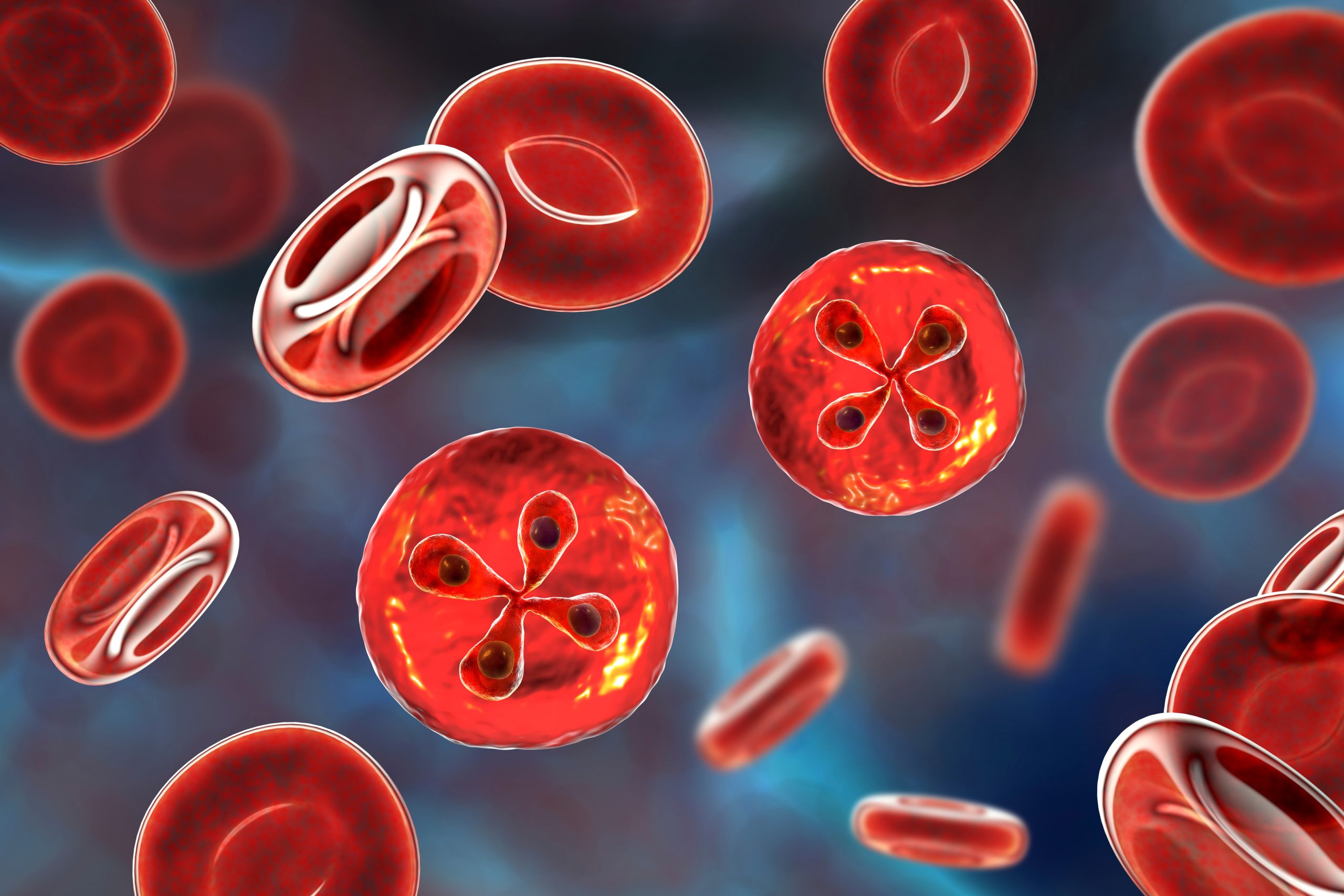
Because Babesia is different, not your typical infection. It actually invades the inside of your red blood cells, making them less efficient to carry oxygen. In this respect Babesia behaves much more like malaria, in symptoms, diagnosis, and treatment.
Since doctors trained in the U.S. don’t know anything about malaria, they listen to a patient reporting persistent, relapsing flu-like illness characterized by drenching night sweats, extreme fatigue, “air hunger” (shortness of breath), and anemia. All of this is occurring because red blood cells are attacked by the Babesia germ.
Here’s a picture of Babesia in blood cells. Or here.
Although the one female patient had a history of Lyme disease, likely reactivated by recent stress in her life, the other three did not have any Lyme history. All had been ‘outdoorsy’ but may have had tick bites.
Symptoms in common with all were unexplained “fatigue,” body aches, and headaches. The older woman had bed drenching sweats which her doctors said was “just menopause.” Another was graphic about her “air hunger” although a pulmonologist said her lungs were fine. Indeed, they were “fine.” The blood going to her lungs wasn’t carrying enough oxygen.
The diagnostic testing for tick borne illnesses is singularly annoying because the
not-great tests (Quest, LabCorp) are covered by insurance, while the better tests (Igenex, InfectoLab), are not. Currently your best test covered by insurance for Lyme is the Western Blot test and the best test for Babesia is FISH, an acronym for Fluorescence in situ Hybridization which actually sees the parasites in the blood cells. By the way, this is the same way malaria is diagnosed. Here’s a picture of malaria in human red blood cells.
So, we’ve got this malaria-like illness transmitted by tick bites coming to us from tick rich areas. Chronic malaria, if you read the novels of Joseph Conrad and W. Somerset Maugham, can last for years. Same with Babesia, left untreated, well over a year or more, after which it seems to ‘burn out,’ but then can resurface during a period of stress when your immune system is compromised. We saw this during long COVID.
Lastly, treatment. Not surprisingly, you start with the same medications used for malaria, drugs like Atovaquone or Quinine with a regular antibiotic like azithromycin. The widely used herbs for malaria can also be helpful for Babesia: cryptoleptis, Chinese skullcap, Japanese knotweed.
Anyway, the real key is caution. Use a tick repellent spray when out in the woods; tuck your pants into your socks, tick checks, etc., etc.
And if you think you may have been infected with Lyme, Bartonella, or Babesia, schedule an appointment with one of our providers.
Be well,
David Edelberg, MD
cool!!
fef
As someone who’s battled with tick-borne illnesses before, I found your insights on Babesiosis really informative! It’s essential to raise awareness about these risks —prevention is key. Also, just like in gaming on hollow knight , staying aware of your surroundings can save you from tough battles in real life too!
Dorothy Morgan
ime outdoors. Babesiosis is a tick-borne illness caused by Babesia parasites that infect red blood cells. Learning how the disease is transmitted, recognizing symptoms such as fever, fatigue, chills, and muscle aches, and taking preventive measures against tick bites can help reduce the risk of infection and ensure prompt medical care if needed. After reading about health and outdoor safety, I enjoy unwinding with minefun io, a creative multiplayer sandbox game where you can build, explore, and join friends on exciting block-based adventures.
hanmira
A valuable discussion about the need for greater recognition of lesser-known conditions.
block blast
This is a truly eye-opening read! It’s alarming how many people are suffering without a clear diagnosis for Babesia, especially with its prevalence as a co-infection. It really highlights the importance of thorough testing and informed doctors. It reminds me that sometimes, to really get to the root of things, you have to keep digging, much like how you might keep trying different strategies to master a challenging level in a game like Drift Hunters. Thanks for shedding light on this crucial topic!
Suzuna Murai
It is so frustrating how often these tick-borne infections are dismissed by traditional doctors. Thank you for shedding light on the importance of testing for Babesia, and if you want to find something fun to do while you rest and recover, you can check out </… pokelike
pokelike.app
This game is unusual since it allows practicing before the match. Such game genres rarely do this. Practice mode lets players freely use the landscape. This mode has a priority, thus it takes less time than on the main game screen. After returning to its death site geometry dash subzero, the geometric cube will continue its journey. Unlike genuine game mode, you must restart. To start the big journey fast, train hard and smoothly. Hard work and practice yield worthwhile results. Being patient is crucial since you can die hundreds of times.
geometry dash
Hi Susan
Like malaria, babesia can return even though it has been treated. The treatment places the germ into a dormant phase which can last for years but if for any reason, immunity falters the germ can reawaken and symptoms reappear
David Edelberg, M.D.
I was diagnosed in 2010, with chronic and acute Lyme as well as Babesia….. I was treated for 2 years with all sorts of antibiotics as well as the animals….. I still have all the symptoms, as well as burning feet and neuropathy… I’m still in all the vitamins…… so expensive. I have my heart dr wanting me off all the vitamins… my Lyme dr., dropped me a long time ago. My new internist says, if I was treated , it is gone. My Functional medicine dr. Who is who diagnosed me, had sent me to the Lyme Dr… I had her listed as my primary. She no longer does any primary treatments, and accepts no insurance. I’m in limbo!
Dionn Finchum
You mentioned it can resurface if left untreated. Can it come back if one was treated? I was diagnosed and treated in 2020 and I still have flareups of night sweats, air hunger and brutal fatigue during times of stress.
My symptoms were dismissed and untested.
I’ve also been treated for Lyme (3 weeks of antibiotics) numerous times. Ticks seem to like how my skin smells.
Anyway, I feel the babesia symptoms are more relevant to how I feel.
Thanks!
Susan
The part about patients going through test after test without any answers really hit home. It’s frustrating when you know something’s wrong, but the tests come back clear. Hopefully, more doctors will start looking at co-infections like Babesia as part of their diagnostic process.
Nano Banana AI
It’s eye-opening how often Babesia goes undiagnosed, even in people who’ve had Lyme disease before. Raising awareness seems especially important in regions with higher tick populations, since early detection can make such a difference. Sharing more information about co-infections like this can really help people take their symptoms seriously and seek proper testing.
Nano Banana AI
This is an engaging and memorable piece—you clearly know how to tell a story and keep readers hooked. The opening with real patient experiences is especially effective; it immediately creates urgency and makes the topic feel relevant rather than abstract Space Waves
Stacey Holt